
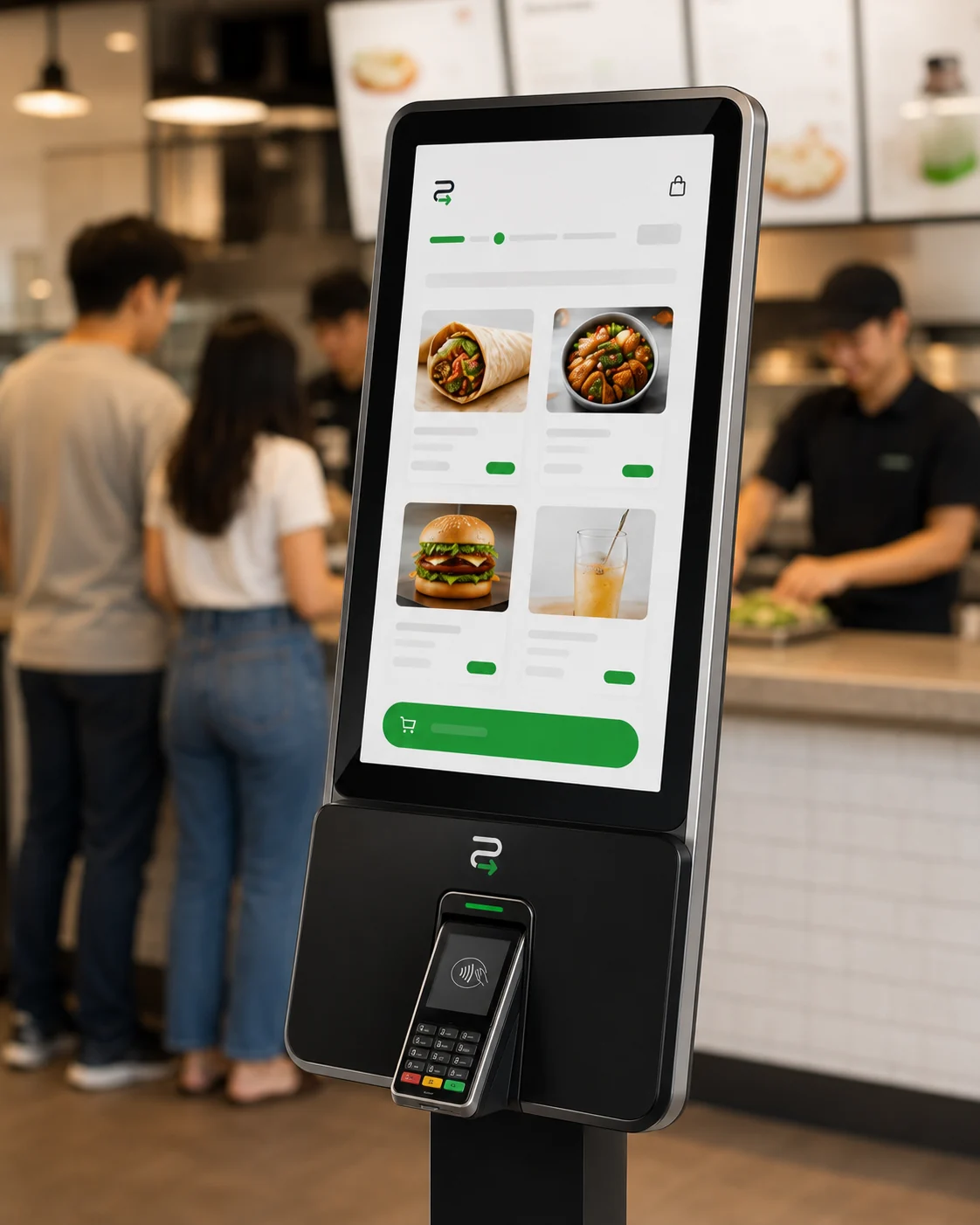
A second ordering lane for the rush, without changing how your team makes food.
Why Shawarma Restaurants Are Ideal for Self-Ordering Kiosks
Shawarma restaurants have a natural build-your-own ordering flow. Customers choose a base (wrap, plate, salad, or bowl), pick a protein (chicken, beef, lamb, or mixed), then select from dozens of toppings, sauces, and sides. This customization is what makes shawarma great — but it also creates a bottleneck at the counter during rush hour.
Every customer who asks "what sauces do you have?" or decides between garlic sauce and tahini adds 20–30 seconds to the ordering process. Multiply that by 50 customers during lunch rush, and you've added 15–25 minutes of cumulative wait time. A kiosk eliminates this bottleneck by presenting every option visually, letting customers customize at their own pace.
The highly visual nature of shawarma menus also makes kiosks more effective. When customers can see photos of each sauce, topping, and side option, they're more likely to add extras. This isn't about tricking customers — it's about showing them options they might not have thought to ask about. The garlic potatoes, the fattoush salad, the extra hummus — these items sell themselves when presented visually.
Ontario's shawarma scene is competitive. In cities like Mississauga, Brampton, and the Waterloo region, customers have dozens of options within a short drive. The restaurants that serve customers fastest during peak hours capture more business. A kiosk is one of the most direct ways to increase throughput without increasing staff.
How It Works for Shawarma Shops
Customer selects their base
Wrap, plate, bowl, or salad — your categories, your naming, your pricing. The kiosk mirrors your actual menu board.
Customize with toppings and sauces
Every topping, sauce, and modifier is presented with visual clarity. Customers select exactly what they want without verbal back-and-forth.
Add sides and drinks
The kiosk naturally suggests sides (fattoush, hummus, garlic potatoes) and drinks. These prompts increase order value without feeling pushy.
Pay and send to kitchen
The order is formatted as a clean kitchen ticket — identical to how your team receives counter orders. No new processes to learn.
The Shawarma Rush Hour Problem
Every shawarma restaurant owner knows the pattern. Between 11:30am and 1:30pm, your shop goes from quiet to chaos. A line of 10–15 people forms. Your cashier is working as fast as they can, but each order takes 60–90 seconds to process verbally. The kitchen is backing up. Customers at the end of the line are checking their phones, calculating whether they have time to wait.
Some customers leave. You'll never know how many — they just walk out and go to the restaurant next door. This is the hidden cost of long lines, and it's one of the biggest revenue leaks in the quick-service industry.
A self-ordering kiosk addresses this directly. By opening a second ordering channel, you split the queue. Customers who know exactly what they want step up to the kiosk. Customers who need guidance or have questions stay at the counter. Both channels feed the same kitchen, but the total throughput increases significantly.
Read more: Why Shawarma Restaurants Are Ideal For Self-Ordering Kiosks
Related Resources
Why Shawarma Restaurants Are Ideal For Self-Ordering Kiosks
A deep dive into the shawarma-kiosk fit.
The Hidden Cost of Long Lines in Quick-Service Restaurants
Understanding how wait times impact your revenue.
Restaurant Kiosks
General overview of restaurant kiosk technology and benefits.
Relay in Mississauga
Self-ordering kiosks for restaurants in Mississauga, Ontario.
Shawarma Kiosk FAQ
Ready to speed up your shawarma shop?
Join Ontario shawarma restaurants already using Relay to handle rush hour. Start with a free 14-day pilot.