
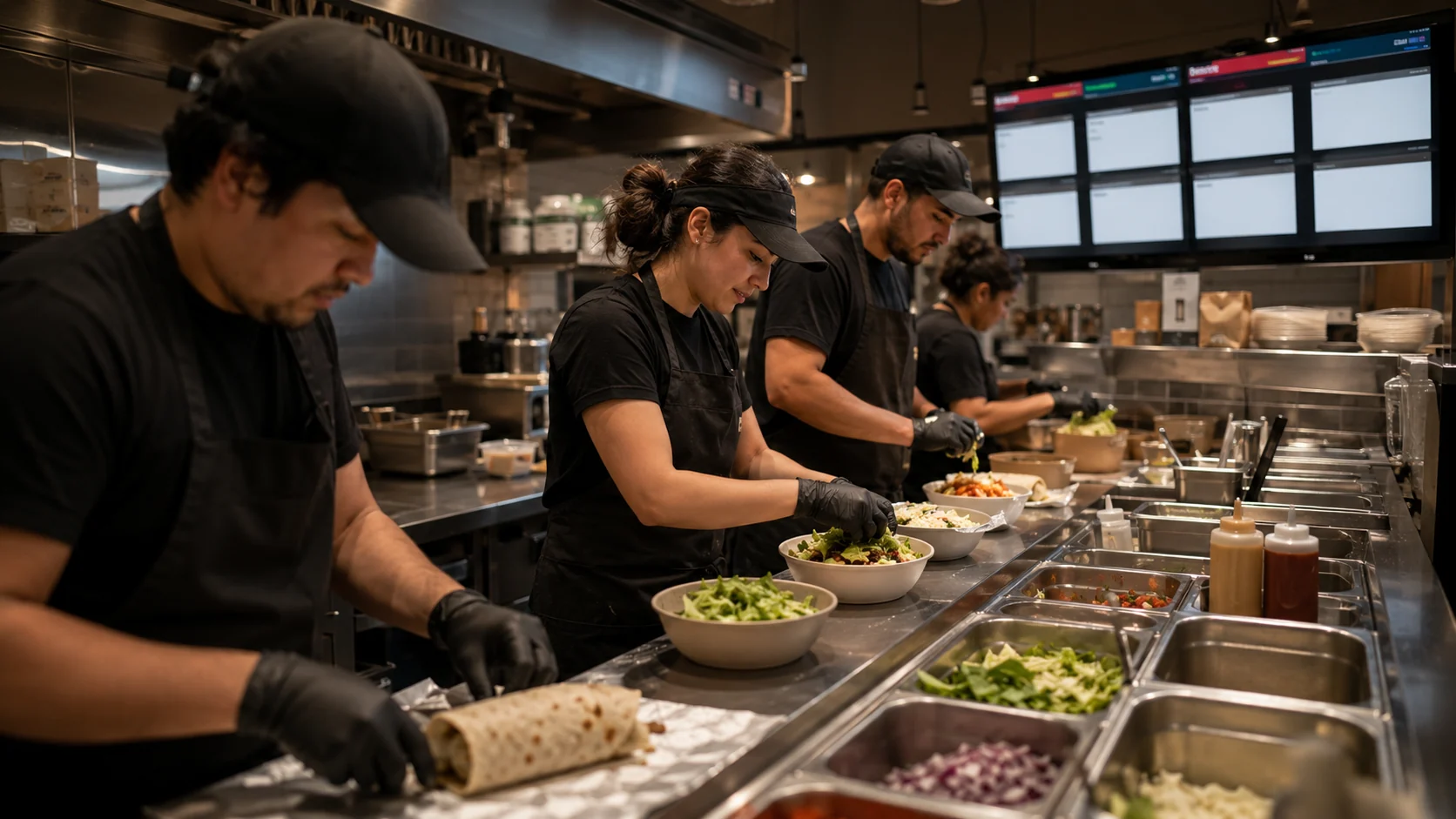
A second ordering lane for the rush, without changing how your team makes food.
Good ordering software fixes more than checkout
Restaurant ordering software is often discussed as if it is just a digital checkout screen. In practice, it does far more than that. It decides how clearly guests see your menu, how quickly they move through modifiers, how reliably add-ons are presented, and how cleanly the final order reaches your kitchen.
For independent quick-service restaurants, that matters because rush-hour problems usually begin before the kitchen ever touches the food. A guest is waiting at the counter. The cashier is answering the same modifier questions repeatedly. The next several people are watching the line grow. Good ordering software reduces that friction by turning a rushed verbal interaction into a guided, consistent digital flow.
Relay is designed around this operational reality. The software is not trying to impress with complexity. It is trying to help a busy restaurant capture orders cleanly, keep throughput steady, and make self-ordering practical for real stores with real constraints.
What restaurant owners should expect from the software
Guest-friendly menu flow
Clear categories, intuitive modifier steps, and a touchscreen flow that mirrors how customers actually buy from your restaurant.
Clean kitchen routing
Orders should arrive at the kitchen as structured, readable tickets. If the kitchen has to decode the software, the software is not helping enough.
Flexible menu management
Categories, combos, add-ons, and pricing should be manageable without turning every menu update into a full operational event.
Channel-level reporting
You should be able to compare kiosk and counter performance by hour, item mix, and average order value.
Rush-hour speed
The software should shorten repetitive cashier work and help the restaurant capture more orders during the busiest part of the day.
Practical reliability
Independent restaurants need software that is dependable during service, not a feature list that looks strong only in a demo.
Why Relay's ordering software is built around the kitchen ticket
Many digital ordering tools are evaluated almost entirely from the guest side of the screen. That is understandable, but incomplete. The real test of restaurant ordering software is what happens after the customer presses pay. Does the order route clearly? Does the kitchen understand it instantly? Do modifiers stay readable when the order is complex?
Relay is designed so the software experience remains useful to the operation, not just attractive to the customer. The guest gets a guided self-ordering experience. The restaurant gets cleaner ticket flow, better channel visibility, and a front counter that does not have to carry every transaction alone.
This is especially important for menus with layers of customization, such as shawarma, burritos, poke, chicken combos, and bubble tea. The more modifier-heavy the order path becomes, the more important the software layer becomes.
Related resources
Best Restaurant POS Systems for Self-Ordering Kiosks in Canada
A framework for evaluating POS environments that need to support self-ordering effectively.
How Independent Restaurants Can Deliver a McDonald's-Style Ordering Experience
The chain-inspired principles that matter most for self-ordering quality and speed.
Restaurant Self-Ordering System
See how software and kiosk hardware fit together in a complete self-ordering workflow.
Restaurant Kiosk
Explore the broader kiosk solution for busy quick-service restaurants.
Restaurant ordering software FAQ
Want ordering software that actually helps the rush?
Start a free 14-day pilot and evaluate Relay in your real restaurant workflow.